
Reusability is the key – new record for SpaceX and Falcon 9
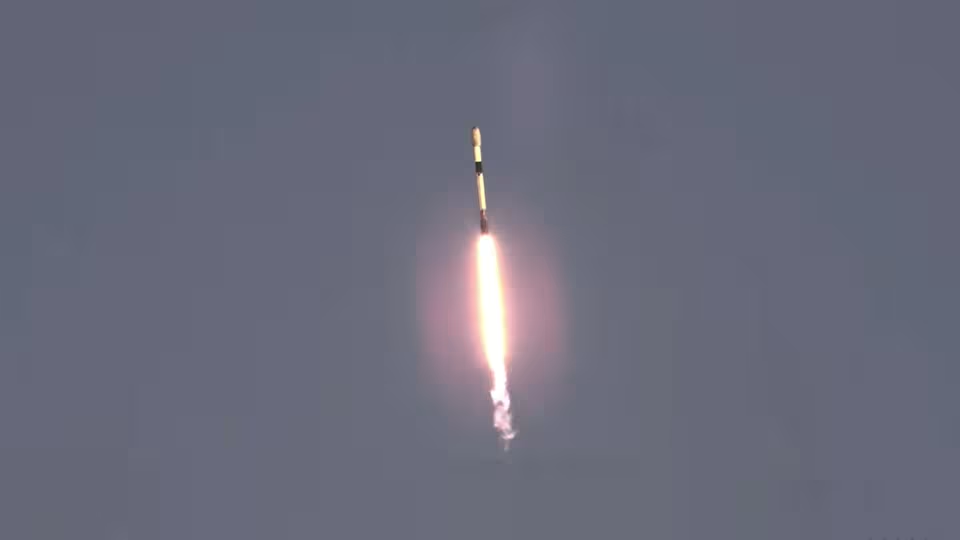
In 2024, SpaceX launched a record-breaking 134 Falcon 9 family rockets into space, surpassing its previous record of 96 launches in 2023. Globally, there were 259 orbital rocket launches last year, meaning SpaceX alone accounted for roughly half of them.
The Falcon 9 launch on October 25, 2025, broke last year’s record, marking the 135th Falcon 9 launch this year. Excluding Starship test flights, SpaceX has averaged about three launches per week.
The key to this intense launch cadence is the reusability of the Falcon 9’s first stage. The first stage used in this record-breaking flight, identified as B1081, had already flown 18 times previously. The record holder is stage B1067, which has completed 31 flights. Initially, SpaceX planned to use each first stage about ten times, but improvements have significantly increased their flight capacity.
First stages have been recovered 523 times.
Most of SpaceX’s launches have carried its own Starlink satellites into orbit. This record-breaking flight also carried 28 Starlink satellites, joining the network of 8,700 satellites in space. Including decommissioned first-generation Starlink satellites, SpaceX has launched over 10,000 of them.
Without the largely reusable Falcon 9 rocket, SpaceX could not have launched such a large number of satellites so quickly. The frequent Starlink launches have also made Falcon 9 launches routine, benefiting other satellite and probe operators.
The cost of accessing space has dropped dramatically and will continue to decrease in the future. This, in turn, enables many new types of space economy projects—like those explored by SpacEconomy.