
EuroSuit is a prototype for an European space suit
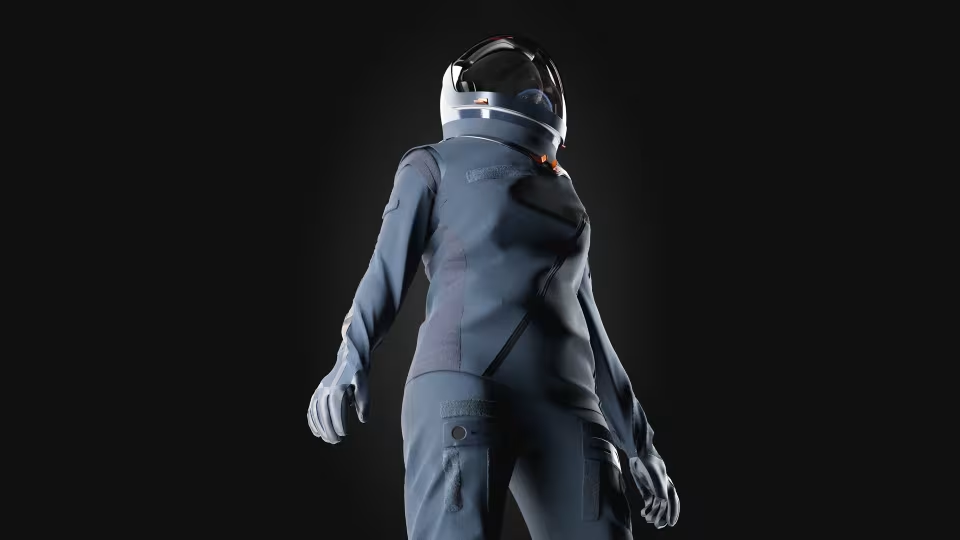
Although Europe currently has no official plans to develop its own crewed spacecraft, a great deal of technology is already being developed to enable future European human spaceflight.
One concrete example is the recently unveiled EuroSuit spacesuit. It is not designed for spacewalks but exclusively for use inside spacecraft or space stations. For now, it is only a prototype, which French astronaut Sophie Adenot will test on the International Space Station next year.
The suit has been developed under the leadership of the French space agency CNES. Spartan Space a company specialising in technology for extreme environments, acts as the contractor and is responsible for the overall technical architecture and life-support system. The space-medicine institute MEDES has developed a real-time physiological monitoring system integrated into the suit, while the sports retailer Decathlon contributes textile and ergonomic expertise through its Advanced Innovation unit.
The key goal is that the suit can be donned or doffed in under two minutes without assistance. Currently, putting on or taking off spacesuits is a slow process that usually requires help from another crew member. Intra-vehicular suits are mainly worn during the “dynamic phases” of a mission - launch, docking, re-entry, and landing - so that a sudden loss of cabin pressure would not endanger the crew.
In the future, when spaceflight becomes more routine and more stations exist, one important role of such suits will be as emergency equipment: if a fire breaks out or there is a severe air leak, the crew can quickly put on the suit and only then decide on further action.
Adenot’s task will be to test the suit in weightlessness, focusing especially on ergonomics: Does it go on easily? Is movement comfortable? How well does it adapt to the spine lengthening that occurs in microgravity, and do the gloves work properly with touchscreens?
According to current plans, Sophie Adenot will fly to the ISS for her six-month mission in spring 2026. She will be the first career astronaut from ESA’s 2022 selection class to go into space. Two project astronauts from the same selection have already flown shorter missions — the first being Sweden’s Marcus Wandt in January 2024.