
New Glenn tries again (updated)
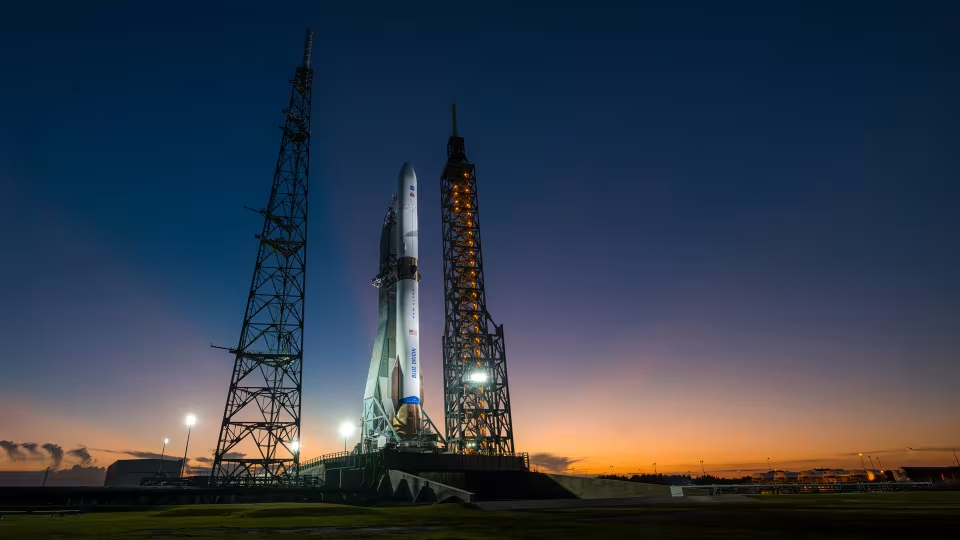
SpaceX has done significant work to make space launches routine and reduce their cost to a record low. It's no surprise that the company currently conducts the majority of rocket launches in the Western world.
However, such a large market share is abnormal and detrimental to competition. There are few companies capable of competing with SpaceX, but one notable contender in the future is Blue Origin, founded by Amazon's Jeff Bezos.
Blue Origin conducts near-monthly space tourism flights to the edge of space and back with its reusable New Shepard rocket, and it has also developed a larger New Glenn rocket capable of reaching orbit.
New Glenn operates similarly to SpaceX’s Falcon 9, with its first stage being reusable. The second stage may also become reusable in the future. In size, the rocket is significantly larger than Falcon 9, approaching the scale of the new Starship rocket.
New Glenn is poised to be a key competitor to both Falcon 9 and Starship in the future. Both New Glenn and Starship promise significantly cheaper and more convenient access to space, with their large fairings enabling the launch of larger objects.
Blue Origin conducted the first test flight of New Glenn last January. It successfully delivered its payload to space, but the first stage failed to return. Now, the company is preparing for a second test flight, hoping the first stage can successfully land on a platform in the Atlantic. The payload for this second flight includes two NASA probes destined for Mars.
The first launch attempt on Sunday, 9 November, in the evening Finnish time was canceled due to weather, a cruise ship entering the restricted area, and an issue with ground equipment. On Wednesday, 12 November, Blue Origin announced the launch will be again delayed, now because of the stormy space weather possibly affecting the ESCAPADE probes the rocket will carry.